Navigate
Online ISSN: 1945-4589
Learn about our FREE Post-
Publication Promotion Services




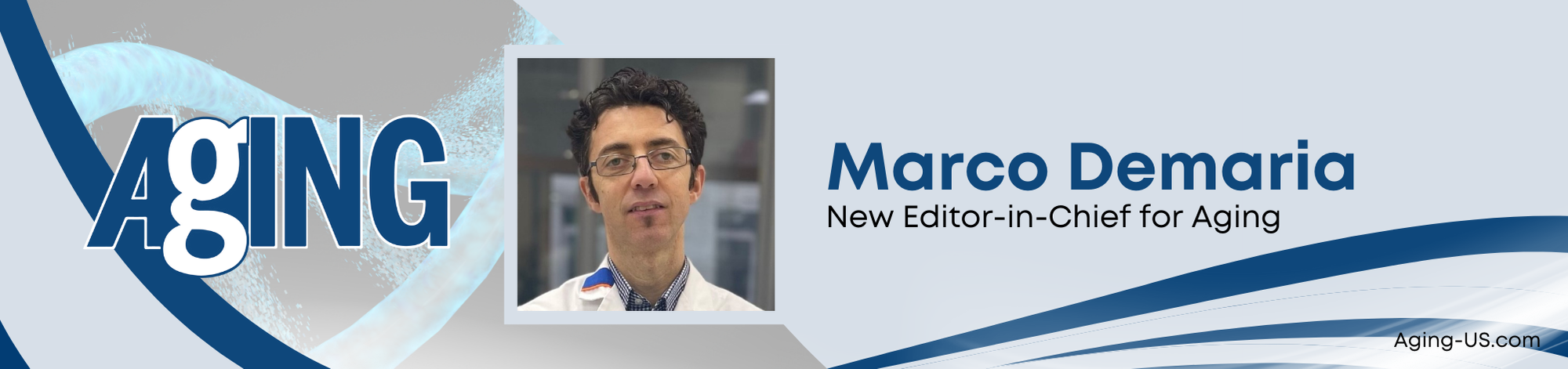
It is with great enthusiasm and a deep sense of responsibility that I have assumed the role of Editor-in-Chief of Aging-US, effective January 1, 2025. Throughout my career at the intersection of aging research, cellular senescence, and translational science, I have witnessed the transformative potential that deeper insights into the biology of aging can have on healthspan and overall quality of life. This is why I am honored to guide Aging-US into its next chapter.
My research actively focuses on the molecular mechanisms underlying aging, with particular emphasis on cellular senescence. I am especially interested in the fundamental molecular pathways that govern the induction and maintenance of senescence, as well as their functional roles in tissue remodeling, inflammation, and age-related diseases. In parallel, I lead interdisciplinary teams and foster collaborations aimed at translating these insights into therapeutic strategies, while also mentoring the next generation of scientists.
As Editor-in-Chief, I will draw upon this ongoing experience to ensure that Aging-US remains a premier platform for high-impact, innovative research. I am committed to advancing the journal’s mission by promoting rigorous science and encouraging interdisciplinary dialogue that bridges basic biology with clinical relevance. In a field as complex and multifaceted as aging, collaboration across disciplines is not just valuable—it is essential.
I look forward to working closely with our outstanding editorial board, contributors, and readers to shape the future of aging research. Together, we will continue to expand the frontiers of knowledge and work toward actionable solutions that improve lives around the globe.
I am excited to embark on this journey with all of you.
For more information about Marco Demaria, PhD, please visit www.demarialab.com and follow him on X (Twitter) @marc_dema or on Bluesky @marcdema.bsky.social.
An epigenetic biomarker of aging for lifespan and healthspan
10.18632/aging.101414Effects of resveratrol, curcumin, berberine and other nutraceuticals on aging, cancer development, cancer stem cells and microRNAs
10.18632/aging.101250Longevity biotechnology: bridging AI, biomarkers, geroscience and clinical applications for healthy longevity
10.18632/aging.206135Effects of a natural ingredients-based intervention targeting the hallmarks of aging on epigenetic clocks, physical function, and body composition: a single-arm clinical trial
10.18632/aging.206221Sex-specific longitudinal reversal of aging in old frail mice
10.18632/aging.206304Theobromine is associated with slower epigenetic ageing
10.18632/aging.206344Systemic factors in young human serum influence in vitro responses of human skin and bone marrow-derived blood cells in a microphysiological co-culture system
10.18632/aging.206288Topical ABT-263 treatment reduces aged skin senescence and improves subsequent wound healing
10.18632/aging.206165Peto’s paradox’s relevance is off the scale
10.18632/aging.206258Identification and prognostic value of metabolism-related genes in gastric cancer
10.18632/aging.103838Brown adipose tissue enhances exercise performance and healthful longevity
10.18632/aging.206179DNA methylation GrimAge strongly predicts lifespan and healthspan
10.18632/aging.101684Infusion of blood from young and old mice modulates amyloid pathology
10.18632/aging.206319The role of phenylalanine and tyrosine in longevity: a cohort and Mendelian randomization study
10.18632/aging.206326