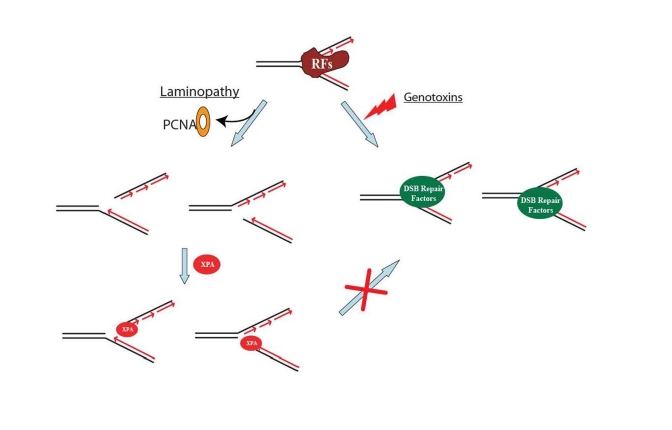
Figure 3.A proposed model showing that DNA double-strand break repair activity is impaired in HGPS and RD cells. Unlike the replication fork
collapse induced by genotoxins, laminopathy-induced replication fork
collapse may be characterized with a possible loss of PCNA at replication
forks. The subsequent possible binding of XPA to the "naked" replication
forks with DNA double-strand breaks (DSBs) blocks the access of DSB repair
proteins to the damage sites. RFs stands for replication factors.