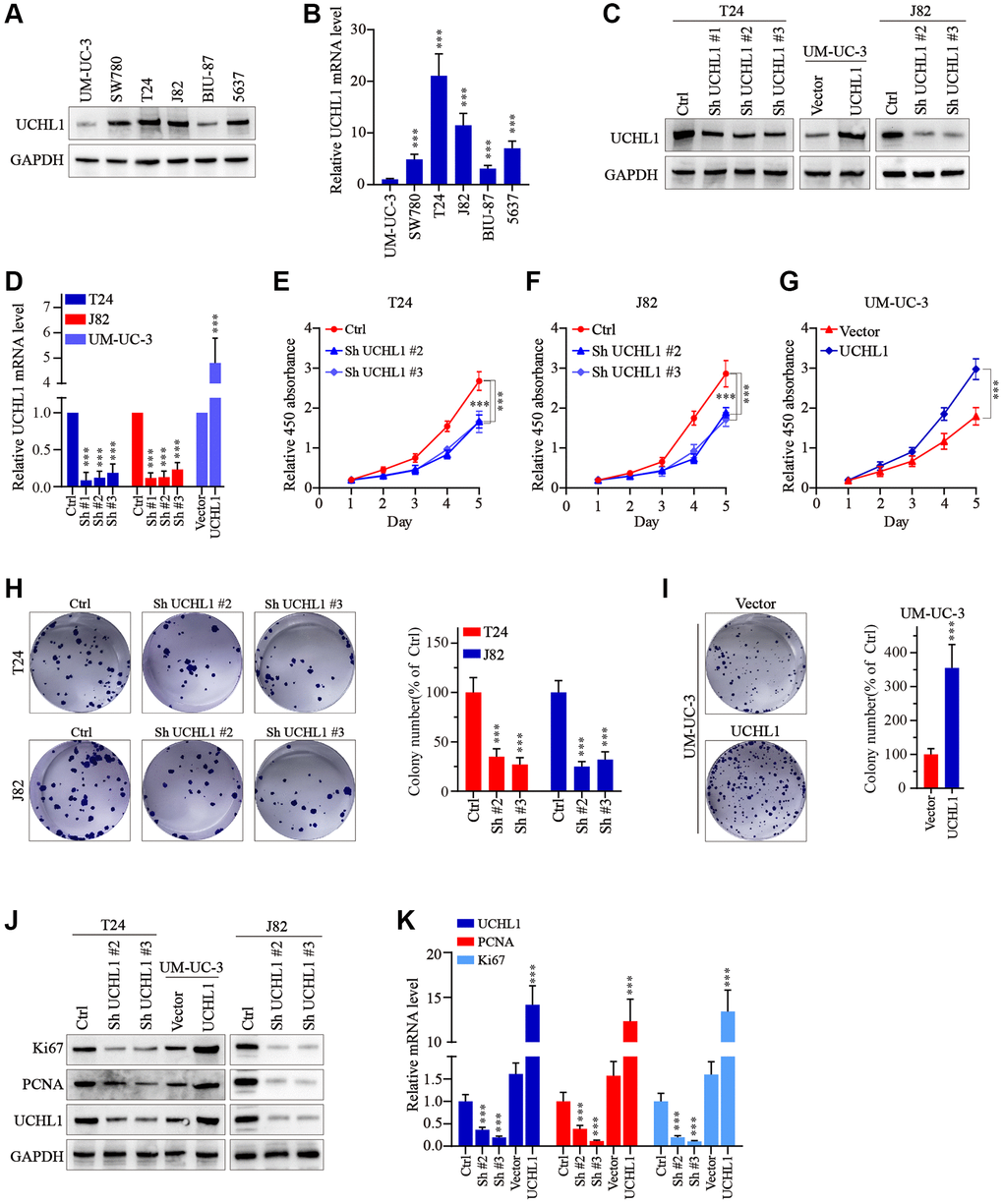
Figure 2.UCHL1 promotes the proliferation capacity of UBC cells in vitro. (A, B) WB and qRT-PCR tests on the UCHL1 protein and mRNA in several UBC cell lines including UM-UC-3, SW780, T24, J82, BIU-87 and 5637 (n = 3). (C, D) Design and WB/qRT-PRC functional validation assay of UCHL1-specific shRNAs and overexpression vectors (n = 3). (E–G) CCK8 proliferation assay to examine the impact of UCHL1 silencing or overexpression on the proliferative abilities of UBC cell lines including T24, J82 and UM-UC-3 (n = 3). (H, I) Colony formation assay to investigate the influences of UCHL1 silencing or overexpression on the proliferation of UBC cell lines (n = 3). (J, K) Ki67 and PCNA detection by WB and qRT-PCR method in UBC cell lines which were respectively treated by UCHL1-specific shRNAs or overexpression vectors (n = 3).