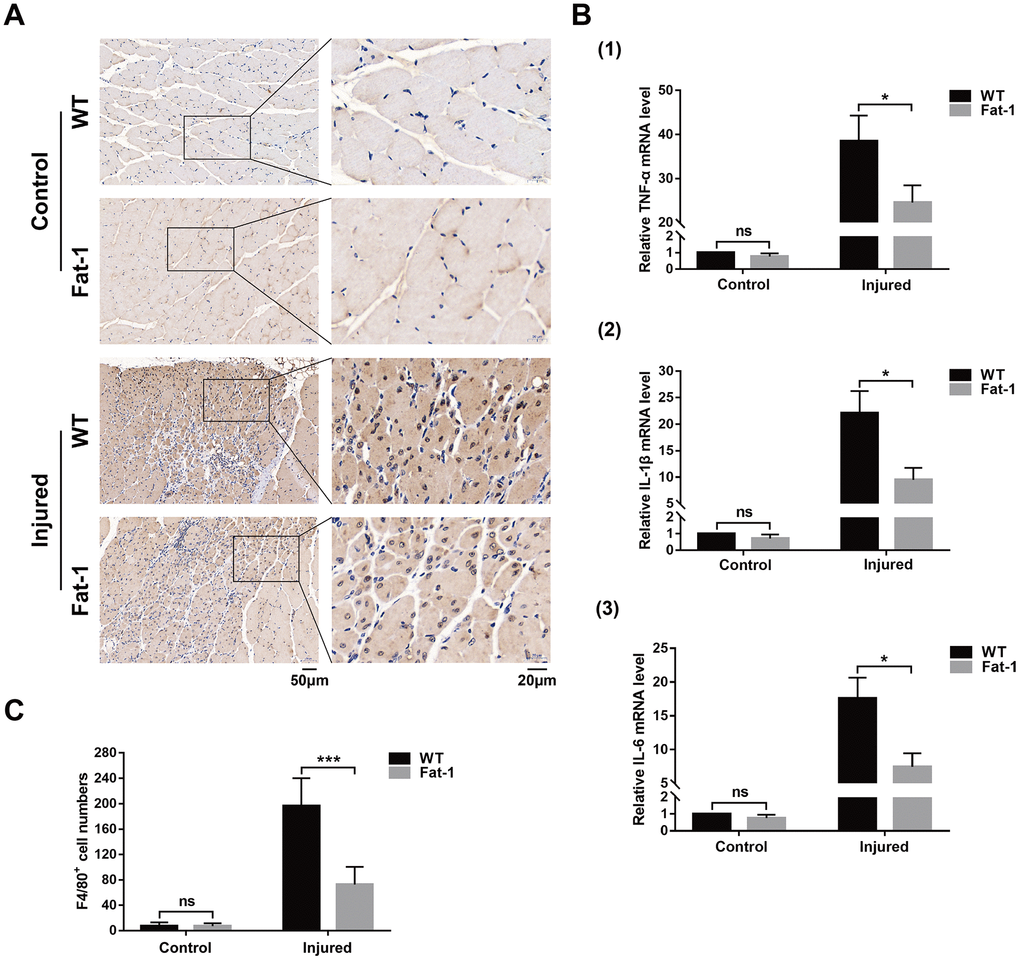
Figure 4.High endogenous n-3 PUFA levels reduce inflammation response to cardiotoxin-induced muscle injury in fat-1 mice. (A) Representative images show Immunohistochemical staining of the gastrocnemius muscle sections from fat-1 and wild-type mice with anti-F4/80 antibody on day 3 after CTX-induced muscle injury. Scale bar = 50 μm, 20 μm. (B) Quantitative data for F4/80-positive cell numbers. (C) Quantitative real-time PCR data shows the relative levels of TNF-α, IL-1β, and IL-6 in the gastrocnemius muscle tissues of fat-1 and wild-type mice on day 3 after CTX-induced muscle injury. Data were expressed as the mean ± SD (n = 3-4). NS, non-significant; * P < 0.05, *** P < 0.001 vs. WT.