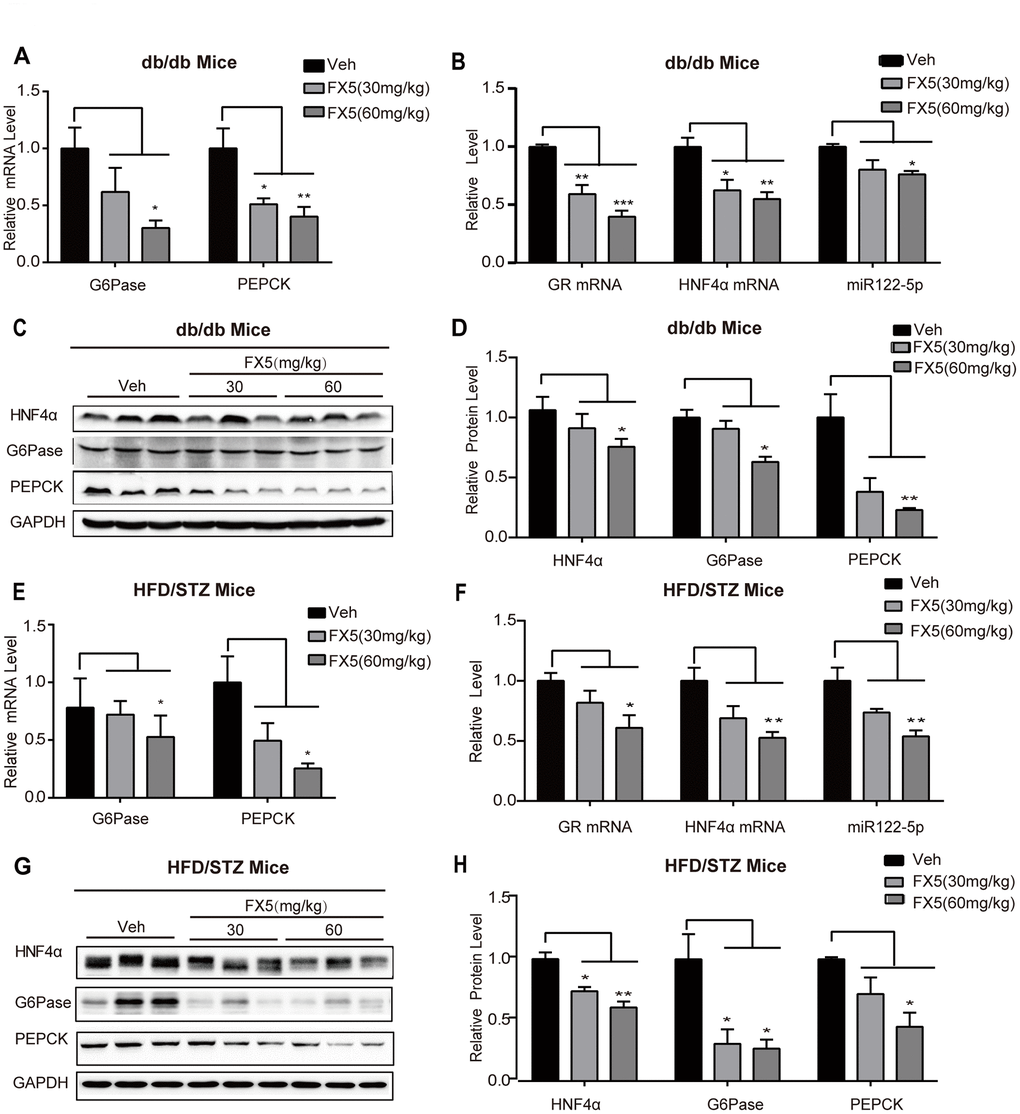
Figure 6.FX5 treatment suppressed hepatic gluconeogenesis in T2DM mice via GR/HNF4α/miR122-5p pathway. (A) mRNA levels of gluconeogenesis gene G6Pase and PEPCK in the liver tissues of db/db mice, all results were normalized to GAPDH. (B) Expression levels of GR, HNF4α and miR122-5p in the liver of db/db mice. (C) Protein levels of HNF4α, PEPCK and G6Pase in the liver tissues of db/db mice were detected by western blot assay and quantified in (D). (E) mRNA levels of G6Pase and PEPCK in the liver of HFD/STZ-induced T2DM mice, and all results were normalized to GAPDH. (F) Expression levels of GR, HNF4α and miR122-5p in the liver of HFD/STZ-induced T2DM mice. (G) Protein levels of HNF4α, G6Pase and PEPCK in the liver of HFD/STZ-induced T2DM mice were detected by western blot assay and quantified in (H). All results were presented as mean ± S.E.M (*P<0.05, **P<0.01 and ***P<0.001).