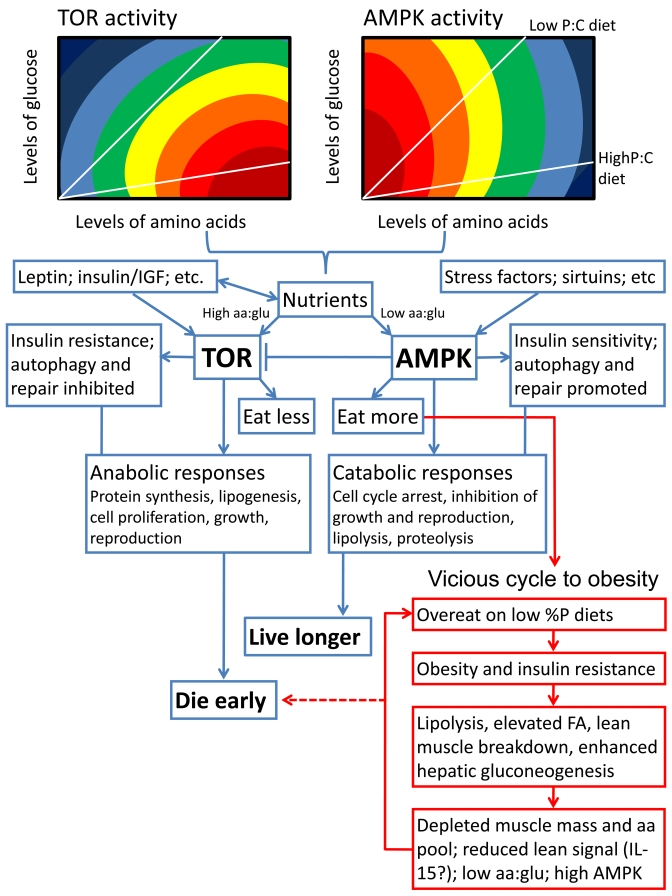
Figure 2.Schematic summarizing our hypothesis for how diet balance might affect lifespan via the TOR and AMPK signaling pathways. We propose that
both TOR and AMPK respond not only to the concentration of circulating
nutrients (with TOR activity stimulated and AMPK depressed either directly
or indirectly by increasing concentrations), but also to nutrient balance.
We show hypothetical response surfaces for TOR and AMPK in relation to
circulating concentrations and ratios of amino acids (aa) and glucose
(glu), with responses rising from dark blue to deep red. The red boxes
indicate what we have termed the vicious cycle to obesity, in which chronic
exposure to a low percent protein diet can drive overconsumption, metabolic
disorders and shortened lifespan unless excess ingested energy is
dissipated (see [20], and further supporting evidence from rodents in
[52,53]). Otherwise, low percent protein diets are life extending via the
normal actions of AMPK, whereas high percent protein diets shorten lifespan
and encourage aging via the TOR pathway.